Are You Getting The “Right” Type of Resveratrol?

Product Overview
What this is
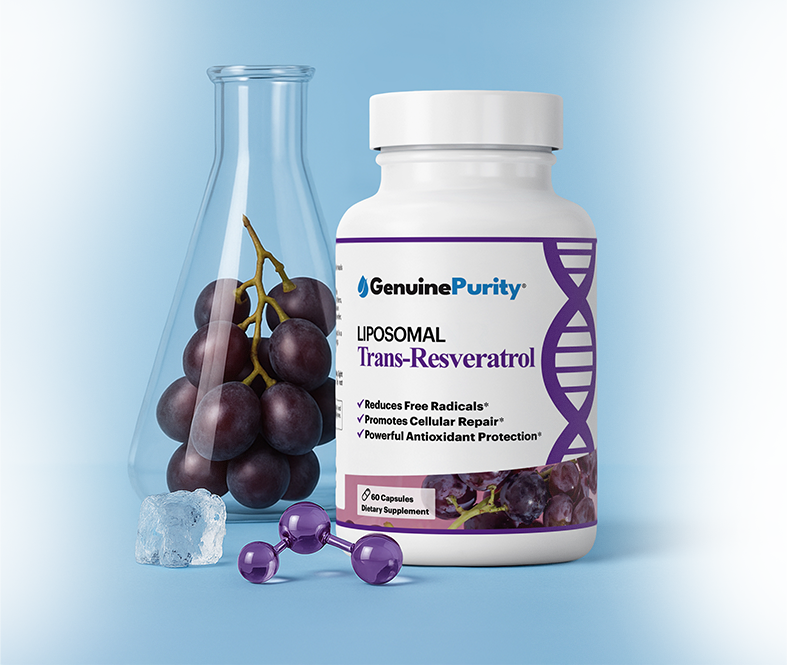
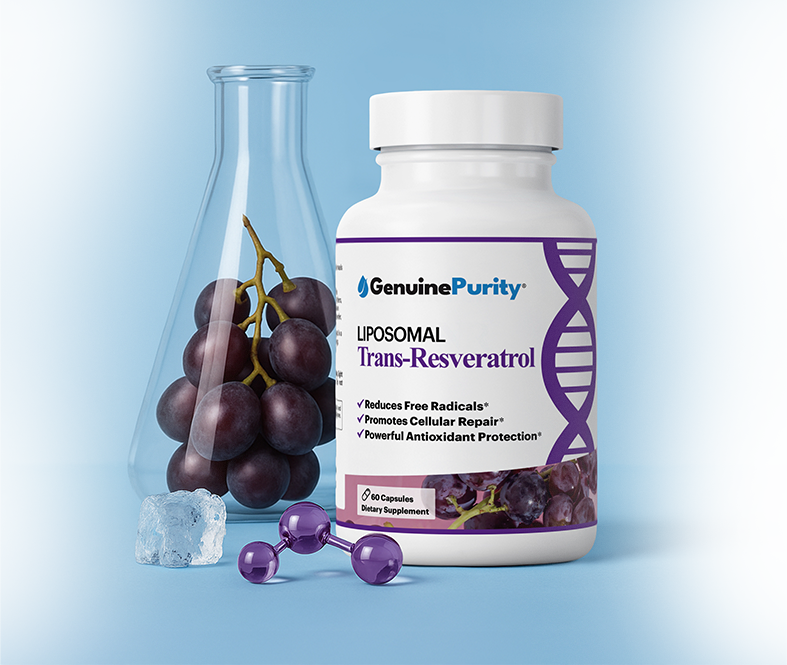
GenuinePurity® Trans-Resveratrol — 98% Pure, Liposomal, Clinically Studied 500 mg is a high‑purity resveratrol supplement that targets absorption and stability concerns that commonly undermine resveratrol’s benefits. You get a concentrated dose of trans‑resveratrol isolated from Japanese Knotweed roots, encapsulated in liposomes to boost water solubility and bioavailability. Each serving is 500 mg (two capsules), formulated for daily use and manufactured in cGMP‑certified facilities in the USA.
Who it’s for
You should consider this product if you want a research‑oriented resveratrol supplement that focuses on:
- Maximum bioavailability rather than low‑cost bulk powder.
- A clinically studied serving size, so you’re not guessing about efficacy.
- Formulations that protect the fragile trans isomer from isomerization and degradation.
- A source other than grapes (Japanese Knotweed often yields higher resveratrol concentrations).
Key Specifications
| Attribute | Detail |
|---|---|
| Active ingredient | Trans‑resveratrol (98% purity) |
| Dose per serving | 500 mg (2 capsules) |
| Formulation | Liposomal encapsulation (pharmaceutical grade) |
| Source | Japanese Knotweed roots (concentrated) |
| Manufacturing | Made in USA, cGMP facilities |
| Suggested use | 2 capsules daily with a meal |
| Shipping | Free within continental USA |
| Guarantee | Money‑back satisfaction guarantee |


What Makes It Different?
Purity and isomer specificity
You’re buying a product that emphasizes 98% trans‑resveratrol. That matters because resveratrol exists in cis and trans isomers; the trans isomer is the biologically active form most consistently associated with health benefits. Many cheaper supplements don’t differentiate or contain lower purity, which can dilute potential effects.
Liposomal encapsulation
Resveratrol is notoriously poorly water‑soluble and subject to rapid metabolism. Liposomes — small phospholipid vesicles — can encapsulate resveratrol and help it cross watery environments and biological membranes. That means more of the active compound reaches systemic circulation and cellular targets before being broken down.
Japanese Knotweed source
Knotweed (Polygonum cuspidatum) is a traditional and potent botanical source. Compared to grape skins, the roots can offer a higher concentration of resveratrol, reducing the amount of raw botanical material needed and improving standardization potential.
Mechanism of Action — How It Works in Your Body
Cellular signaling and longevity pathways
When you take trans‑resveratrol, it interacts with multiple molecular pathways:
- Activates sirtuins (notably SIRT1), proteins linked to metabolic regulation and cellular stress resistance. This activation can mimic some caloric restriction effects.
- Supports mitochondrial function by promoting biogenesis and efficiency, which can influence energy, endurance, and aging biomarkers.
- Influences AMP‑activated protein kinase (AMPK), a central energy sensor that supports metabolic health.
Antioxidant and anti‑inflammatory activity
Resveratrol acts as a direct antioxidant and indirectly upregulates endogenous antioxidant defenses. It modulates inflammatory signaling (NF‑κB pathways), which helps reduce chronic inflammatory tone linked to cardiometabolic risk and neurodegenerative processes.
Vascular and metabolic effects
You’ll see effects on nitric oxide production and endothelial function, which help blood vessel dilation and healthy blood pressure. Resveratrol can also improve insulin sensitivity and glucose handling via AMPK and SIRT1‑mediated mechanisms.
Evidence and Clinical Context
Clinical dosing and study relevance
The product provides 500 mg per serving — a dose that matches or exceeds many clinical studies showing measurable metabolic, vascular, and cognitive markers benefits. While resveratrol research varies in dose and formulation, consistent themes emerge around improved insulin sensitivity, endothelial function, lipid modulation, and potential neuroprotective effects at doses between 150 mg and 1,000 mg daily in different trials.
Liposomal vs. standard formulations
Clinical translatability depends heavily on bioavailability. Studies using unformulated resveratrol often require higher doses to achieve plasma levels that affect target tissues. Liposomal encapsulation increases the likelihood that the 500 mg dose will produce meaningful systemic exposure comparable to higher unencapsulated doses.
Potential Benefits — What You Could Expect
Cardiometabolic health
You may notice improvements in markers that relate to cardiometabolic risk:
- More stable blood sugar and improved insulin sensitivity.
- Favorable modulation of lipid profiles (potential reductions in LDL, improvements in HDL).
- Support for healthy blood pressure via improved endothelial function and nitric oxide biology.
Neurocognitive support
Resveratrol crosses the blood‑brain barrier to some extent and may:
- Enhance brain‑derived neurotrophic factor (BDNF) signaling, supporting neuronal resilience and plasticity.
- Reduce oxidative stress and neuroinflammation, which contribute to cognitive decline.
Mitochondrial and longevity pathways
By activating SIRT1 and enhancing mitochondrial biogenesis, you can support cellular energy production and stress resilience—mechanisms linked to longevity and better functional performance.
Additional supportive effects
- Immune system modulation and antioxidant support.
- Joint comfort through reduced inflammatory signaling.
- Energy and metabolic regulation via AMPK activation.
Breakdown: Benefits vs. Evidence Strength
| Claimed Benefit | Evidence Strength | Notes |
|---|---|---|
| Improved insulin sensitivity | Moderate‑High | Several human trials show glucose and insulin benefits at moderate‑high doses. |
| Blood pressure and endothelial support | Moderate | Some randomized trials show improved flow‑mediated dilation and NO markers. |
| Lipid profile improvements | Moderate | Effects vary by population and dose; improvements with consistent use noted. |
| Cognitive and neuroprotective effects | Moderate | Emerging human data plus robust preclinical evidence. |
| Longevity pathway activation (SIRT1) | Moderate | Mechanistic evidence strong; long‑term human longevity data limited. |
| Joint comfort/anti‑inflammatory | Low‑Moderate | Biological plausibility and some clinical signals, but not a primary indication. |
Bioavailability: Why Liposomes Matter for You
The challenge
Resveratrol is lipophilic, has limited aqueous solubility, and undergoes extensive first‑pass metabolism. Without formulation strategies, oral bioavailability is low. That means large amounts of raw resveratrol can be wasted, and plasma levels may remain below therapeutic thresholds.
The liposomal solution
Liposomal encapsulation uses phospholipid bilayers to create tiny vesicles that house resveratrol. For you, that translates to:
- Improved water compatibility, allowing better movement through intestinal fluids.
- Protection from degradation and isomerization.
- Enhanced absorption across the intestinal epithelium, sometimes via lymphatic uptake that bypasses first‑pass metabolism.
- Potential for lower, more effective doses compared to unformulated resveratrol.
Practical impact
Because GenuinePurity® pairs high purity trans‑resveratrol with liposomes, you’re more likely to get effective systemic exposure at 500 mg than with a 500 mg unencapsulated powder. That can save money and reduce pill burden compared to large‑dose traditional formulas.
Quality and Sourcing
Japanese Knotweed: rationale
You’re getting a concentrated extract from freshly harvested roots. Knotweed has been used traditionally and is a concentrated source of resveratrol, often providing greater yields than grape skins. Sourcing from roots allows manufacturers to standardize extracts more reliably.
Manufacturing standards
Made in cGMP‑certified facilities in the USA, this product adheres to quality controls you would expect: consistent dosing, contaminant testing, and a documented supply chain. That reduces the risk of variability and ensures the trans‑resveratrol claim is credible.
Dosage and Usage Guidance
How to take it
- Standard recommendation: Take 2 capsules daily with a meal. This provides the 500 mg clinically studied dose.
- Timing: With meals that contain some healthy fats to support absorption of the liposomal components and to reduce potential stomach upset.
- Cycle: Daily use is typical for metabolic and vascular effects. For specific protocols (e.g., intermittent higher dosing for short trials), consult a healthcare provider.
What you should expect timeline-wise
- Short term (days–weeks): Subtle improvements in energy and subjective wellbeing; glucose control may show early signals in some individuals.
- Medium term (4–12 weeks): More measurable changes in lipid markers, endothelial function, and insulin sensitivity in responsive individuals.
- Long term (months+): Possible cumulative benefits on cognition, mitochondrial function, and aging‑related pathways.
Safety, Interactions, and Side Effects
General safety profile
Resveratrol is generally well tolerated at moderate doses (up to 1,000 mg daily in many studies). Side effects are usually mild and may include gastrointestinal discomfort, headache, or transient changes in stool.
Potential interactions
You should be cautious if you are:
- On anticoagulant or antiplatelet medications (e.g., warfarin, aspirin at therapeutic doses): Resveratrol can have mild antiplatelet effects and theoretically increase bleeding risk.
- Using medications metabolized by CYP enzymes: Resveratrol can influence certain drug‑metabolizing enzymes, so check with your prescriber for interactions.
- Pregnant or breastfeeding: There’s insufficient safety data; avoid supplementation unless directed by a healthcare professional.
- Undergoing surgery: Consider stopping resveratrol 1–2 weeks before a scheduled procedure due to potential bleeding risk.
Contraindications
Not recommended without medical advice if you have bleeding disorders, are on anticoagulants, or have complex polypharmacy that could interact.
How This Product Compares to Alternatives
Trans‑resveratrol vs. mixed resveratrols
You want trans‑resveratrol because it’s the active isomer most often linked to benefit. Mixed or low‑purity products may include cis isomers or degrade into less active forms.
Liposomal vs. standard powder
Liposomal formulations help you get more resveratrol delivered where it’s needed. Standard powders rely on larger doses to attempt the same effects, which can be inefficient and costlier in the long run.
Botanical source: Knotweed vs. grapes
Grapes and red wine are popular sources, but their resveratrol content is variable and typically lower than concentrated knotweed extracts. If you want a standardized daily therapeutic dose, knotweed‑derived extracts are common in supplements.
| Feature | GenuinePurity® Liposomal Trans‑Resveratrol | Typical Unformulated Resveratrol Powder |
|---|---|---|
| Active isomer | High trans content (98%) | Variable; often unspecified |
| Bioavailability | Enhanced via liposomes | Low; depends on dose |
| Dose efficiency | Clinically relevant at 500 mg | Often requires larger doses for similar effect |
| Source | Japanese Knotweed (concentrated) | Grapes or generic extracts |
| Cost efficiency | Potentially better due to absorption | May seem cheaper per capsule but require higher doses |
Shipping and returns
Free shipping within the continental USA reduces friction in trying the product, and a money‑back guarantee further lowers risk if you don’t notice benefits.
Pricing and Value Assessment
Assess value by:
- Cost per effective dose: Because of liposomal delivery and high purity, 500 mg may be more efficient than buying a cheaper unformulated product and taking higher doses.
- Packaging and manufacturing standards: cGMP production in the USA supports quality claims and may justify a premium.
- Guarantee and shipping: These reduce the financial risk of trying the product, effectively increasing value.
Pros and Cons
Pros
- High purity trans‑resveratrol (98%) targets the active form.
- Liposomal encapsulation enhances stability and absorption.
- Clinically studied dose (500 mg) provided per serving.
- Sourced from Japanese Knotweed, a concentrated botanical.
- Manufactured in cGMP facilities in the USA.
- Free shipping and money‑back guarantee reduce risk.
Cons
- Higher upfront cost than basic resveratrol powders may apply.
- Liposomal products can vary widely in quality; transparency about liposome size and composition would be ideal.
- Possible interactions with blood thinners and drug‑metabolizing enzymes.
- Long‑term human outcome data on longevity remain limited, though mechanistic evidence is strong.
Practical Scenarios: When You Might Choose This
- You’re targeting metabolic markers like fasting glucose or insulin resistance and want an evidence‑oriented dosage.
- You care about vascular health and want a formula that supports endothelial function with improved nitric oxide signaling.
- You want a high‑purity supplement and are wary of low‑quality market options.
- You prefer a product made under strict manufacturing standards in the USA.
- You’ve tried cheaper resveratrol formulas and felt no benefit — you want a more bioavailable approach.
Potential Limitations and Things To Watch
- Watch for labeling transparency: a trustworthy manufacturer will provide third‑party testing or Certificates of Analysis (COAs) verifying purity and absence of contaminants. Ask if these are available.
- Liposome quality matters: not all liposomal claims are equal. Information about lipid type, particle size distribution, and encapsulation efficiency helps you evaluate the delivery system’s credibility.
- Individual responses vary: genetics, gut microbiome, and baseline metabolic health influence how much you benefit. If you’re on multiple medications, consult your clinician first.
FAQs
Will this make you live longer?
You can support longevity pathways like SIRT1 and mitochondrial function with resveratrol, but definitive evidence that any single supplement extends human lifespan is absent. Think of this product as a tool to support cellular resilience and metabolic health rather than a guaranteed life extension remedy.
How soon will you notice effects?
Some people notice subtle energy or wellbeing shifts in days to weeks. More reliable measurable changes in metabolic or vascular markers typically appear within 4–12 weeks of consistent use.
Can you stack it with other supplements?
Yes. Common complements include omega‑3s for vascular health, coenzyme Q10 for mitochondrial support, and polyphenol blends for antioxidant breadth. If you’re taking anticoagulants or other prescription drugs, consult a healthcare provider.
Is 500 mg safe long term?
Most studies use doses up to 1,000 mg with acceptable safety profiles. 500 mg daily is within commonly studied ranges and well tolerated for most adults. Still, check interactions and your personal medical conditions before starting long‑term.
Should you take it with food?
Yes. Taking it with a meal containing healthy fats supports liposomal absorption and lessens the chance of gastrointestinal side effects.
Final Verdict
You get a thoughtful formulation that aligns with current scientific understanding: high‑purity trans‑resveratrol delivered in a liposomal format at a clinically relevant 500 mg dose. If your goals include metabolic support, cardiovascular health, cognitive resilience, or supporting longevity pathways, this product offers attributes that increase the probability of meaningful benefit compared to many unformulated or low‑purity alternatives.
Because quality matters for botanical extracts and bioavailability is the central problem with resveratrol, the combination of Japanese Knotweed sourcing, 98% trans purity, and pharmaceutical‑grade liposomal encapsulation makes this a compelling option for the discerning user. Balance that against cost considerations and any personal medication interactions, and you’ll have a clear rationale for whether to incorporate it into your regimen.
If you want, you can request a checklist for questions to ask the manufacturer (COAs, liposome specs) or a brief comparison with a specific competitor product you’re considering.
Disclosure: Some links on this site are affiliate links, which means we may earn a small commission if you purchase through them—at no extra cost to you. We only recommend products we believe can genuinely support healthy aging and longevity.